One writer dropped Make and n8n for code on a single owned database with Trigger.dev tasks, plus a three-part test for when a platform still earns its fee.
The Best Zapier Alternative Is Often None
The best Zapier alternative is often none: if your data sits in one database you own and your actions are plain functions behind one door, a scheduled task or an agent replaces the glue. I used Make for about a year to assemble social posts, and n8n before that. I dropped both when agents arrived, and nothing I pay for glues my apps together now.
Let’s get one thing straight: I am not telling you to cancel everything tomorrow. I’m telling you the invoice is asking the wrong question. “Which tool is cheaper than Zapier?” assumes you need glue at all. Glue is what you buy when your clients live in one app, your invoices in another and your posts in a third, and each keeps its own copy. Fix that, and most of the glue has nothing left to hold together.
Most of what ranks for this search is written by the vendors themselves. The n8n team’s list of open-source Zapier alternatives argues the open-source case, and it is a fair case: you run it, you see it. But every list in this space answers “which platform?” Almost none asks “do you need one?”
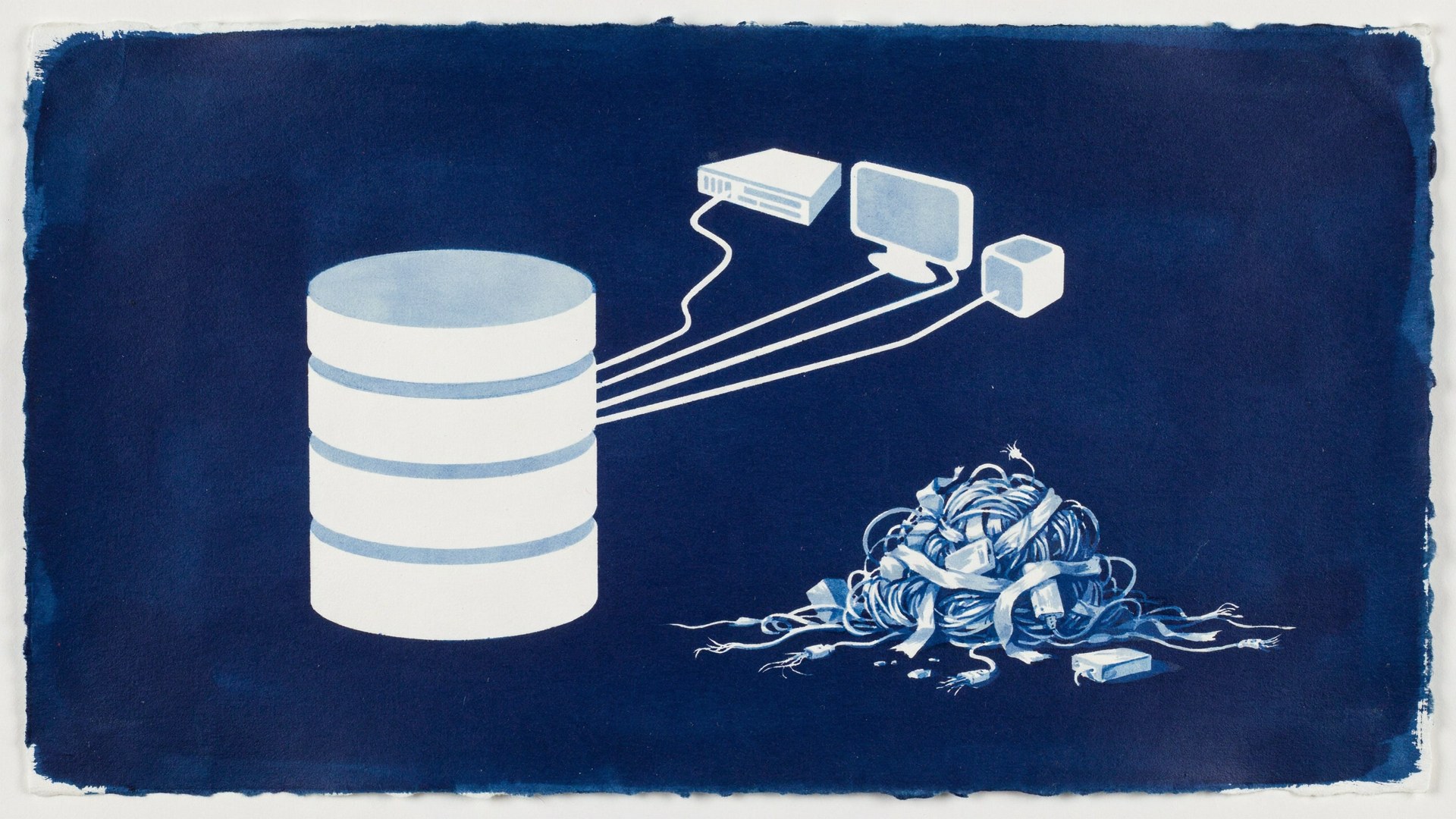
I think you might not. Here is my reason, and it is not a benchmark. Every client, quote, invoice, booking and article of ours sits in one database we own. Agents reach it through one door with one key, which I describe in my column Connect AI to Business Data Without Handing Over Your Passwords. When the data is in one place and every action is a plain function, “connect app A to app B” becomes “call the function on a schedule.” No platform in the middle.
One honest limit up front: I recorded no cost, time or client result from the switch. I can show you what replaced what, from my own code. I cannot show you a saving. If you need a number before you change anything, this column will not give you one, and I would rather say so now.
What I Used and Dropped: Make for a Year, n8n Before That
I used Make for about a year. Not Zapier itself, but they are the same kind of tool: you connect apps with triggers and steps, and the platform runs the chain. My job for it was content assembly for social media, pulling pieces together so a post could go out.
Not recorded. I did not record what Make cost, how many scenarios ran, any time saved, or any client result. The numbers you will not find here are the ones you would need to decide.
Before that, I used n8n. I did not record for how long.
Why did I drop them? In my own words: “Agents became a thing.” That is the whole reason, and it was enough. Once a model can read a task, call a function and check the result, a fixed chain drawn in a visual editor is the old way to do it. I have used most tools on the market and built my own tools because of them. This was one more.
Here is what I did not record, so you can weigh the story: what Make cost me, how many scenarios ran, and any time I saved. I have none of those numbers.
Notice who writes the comparisons you will read. Zapier’s own blog publishes the best Make alternatives and the best n8n alternatives, and Zapier publishes both. That is not dishonest. It is marketing, and Zapier’s blog says who it is. But it means the list you find is a list of platforms, written by a platform.
So when I say I left the category, I mean I stopped looking for a better chain-builder. I started writing the chain as code, next to the data, where an agent could call it.
What Replaced Make and n8n: The Replacement Map
Here is what I replaced, and with what. The “before” column is my account. The “now” column is what the code holds today.
| Job | Before | Now |
|---|---|---|
| Social content assembly | Make, about a year | Publishing code in OSI, landed on main 2026-10-17: Medium gets the full article with a canonical link; LinkedIn, Facebook and X get link posts |
| Campaign checks | Not recorded | A scheduled Trigger.dev task, every 6 hours |
| Feed refresh | Not recorded | A scheduled Trigger.dev task, daily at 06:00 |
| Article runs, cluster relinks, quote lifecycle | Not recorded | Trigger.dev tasks |
| Earlier automations | n8n | Code, as above |
What runs it. The agents service and the shared AI package run on the AI SDK from Vercel, version 7. I also used LangGraph as part of the move; it is not in the code today. Background work runs on Trigger.dev: OSI holds 29 Trigger.dev task files, from the scheduled checks above to video cut, render and transcode, PDF export and the image studio. Trigger.dev cost me $0 in September 2026, on the free plan.
Every one of those tasks reads and writes the same place. Every client, quote, invoice, booking and article of ours sits in one database we own. My column Second Brain for Business: Why I Put Everything in One Database explains why I put it all in one place, and this table is what that buys: a task never has to copy data from one app into another, because there is no other app holding a copy.
Here is one job, start to finish, as a worked example. With Make, social content assembly was a chain of steps in a visual editor, drawn and maintained by me. Now, publishing to social is code in OSI: Medium gets the full article with a canonical link back to the original, and LinkedIn, Facebook and X get link posts. The article already lives in the one database, so the code reads it there. Nothing is copied into a platform first, and there is no chain to keep in sync with the apps on either side.
That is the real replacement. Not a cheaper platform. A task that calls a function, against one database, through one door with one key. My column on the door, Connect AI to Business Data Without Handing Over Your Passwords, explains how agents act there without ever holding a password.
When a Platform Still Makes Sense: The Three-Part Test
I am not against platforms. I am against paying for glue you would not need if your data were in one place. Here is the test I would run before you drop yours.
1. Must the data stay on your own servers? If yes, the question is not Zapier or code. It is where the automation runs. Firecrawl’s roundup of low-code AI workflow automation tools argues that the choice to self-host is mostly made by security or compliance, not by taste. I agree. If a rule says the data stays home, a self-hosted tool or your own code is the answer, not a cloud subscription.
2. Do you have someone to own the code? Code with no owner breaks quietly. If nobody on your team will read an error and fix it, a platform with a visual editor and support is the safer bet. My setup works because I own the code.
3. Do you need a long list of connectors you cannot build? If your work touches dozens of apps that each change their API, a platform that maintains those connectors earns its fee. If your work touches one database and a few outside services, it probably does not.
On the self-hosted side, the n8n documentation on how to host n8n covers running it yourself. Activepieces’ n8n review notes that n8n’s licence is source-available rather than open source in the strict sense. Activepieces is a competitor, so weigh that, but it is worth reading the licence before you build a business on it.
The trade-off is simple. With a platform, you pay a subscription. With code, you pay in build time and in owning it. Neither is free.
- Does the data have to stay on your own servers, by a security or compliance rule? If yes, self-host a tool or run your own code; a cloud subscription is not the answer.
- Does someone on your team own the code and will read an error and fix it? If no, a platform with a visual editor and support is the safer bet.
- Does your work touch dozens of apps whose APIs keep changing? If yes, a platform that maintains connectors earns its fee.
- Does your work touch one database and a few outside services? If yes, a platform probably does not earn its fee.
- Have you checked the plan price on the vendor’s own pricing page today, with the date written down?
The Price Check: Per-Task Pricing, One-Time Fees and My Own Bill
I did not benchmark any of these tools and I ran no new test. So here is what the sources say, with their caveats, and you should check the date on every number before you trust it.
| Platform | Plan as reported | Price as reported | Source |
|---|---|---|---|
| Zapier Free | 100 tasks | $0 | Latenode |
| Zapier Professional | 750 tasks | $19.99/mo annual or $29.99/mo monthly | Latenode |
| Make Core | annual billing | $108/year | Latenode |
| n8n Cloud Starter | 2.5K executions | $20 annual / $24 monthly | Activepieces |
| n8n Community (self-hosted) | no license key needed | Free | n8n docs; Activepieces |
High volume is where per-task pricing bites. Latenode’s list of Zapier alternatives compares plan tariffs across the main tools, and it says plainly that its comparison is a calculation from published tariffs, not a measured benchmark.
The open-source route moves the cost rather than removing it. Hostinger’s guide to no-code AI agent builders covers the self-hosted options, and the point I would add is the one my own bill shows: the AI calls still cost money, wherever the workflow runs.
And the buyer’s mental model is still subscription against one-time fee. A thread on the n8n community forum pitches a one-time Zapier alternative for Perfex CRM against a yearly Zapier subscription. That framing is useful, and it still assumes you need a connector between two apps that each keep their own copy.
My own price check is shorter. Trigger.dev was $0 on the free plan in September 2026. The functions are my code. The data is in one database I own. The cost that matters for me is the time to write and own the code, and I have chosen to pay it.
The One Automation I Would Not Build Myself
There is one job I would not write as my own pipeline: video assembly.
In my own words: “it is very difficult to create our own pipeline without a ton of content already stored that we can use to train and fine tune the pipeline. This is a lot of money and time wasted on output that frankly just never feels quite right, to post. I’d rather use video generations and focus on structuring prompts and styles in an interface that already works.”
That is the boundary. Code beats a platform when the job is clear: check a campaign, refresh a feed, send a quote reminder, post a link. It loses when the job needs taste, a lot of stored material and endless tuning. Assembling a video that feels right is that kind of job.
So for video, I use video generation tools and put my effort into the prompts and the styles, inside an interface that already works. And if I ever need more control, I would build on top of an open-source video editor rather than start from nothing. Why write a timeline editor from scratch when good ones exist?
My code does touch video, to be clear. OSI has Trigger.dev tasks that cut, render and transcode. Those are mechanical steps around the tools, not a pipeline that decides what a good video is. Even the mechanical steps can surprise you: my fix write-up on the $5 video bill a pricing API said was $1.86 reports how far a price estimate can drift from the real bill.
Bold verdict: build the glue, buy the taste. I could be wrong about where your line sits. Mine sits at video.
Structure Before Tools: Keep One Copy, Then Decide
The clevrstart guide to a single source of truth describes the first step: store each client, quote, invoice and booking once, in one database you own. Do that before you compare platforms. Then run the three-part test above. If the data must stay home, if nobody will own the code, or if you need a long list of connectors, keep a platform and choose it with clear eyes.
And if you are about to buy another tool to patch a gap, my column Grow from structure before you buy clients argues the same case for leads that this one makes for glue: build the structure, then decide what to buy.
I don’t know your business, and I could be wrong about yours. What I know is my own record: Make for about a year, n8n before that, dropped when agents arrived, replaced by code on one database. Nothing measured, no saving claimed. Just a smaller list of things to pay for, and nothing left to glue.
Sources
- Top 7 Open-Source Zapier Alternatives You Can’t Skip! – n8n Blog
- The 6 best n8n alternatives in 2026 | Zapier
- The best Make alternatives in 2026 | Zapier
- [Perfex CRM + n8n] One‑time Zapier alternative with bi‑ …
- 11 best no-code AI agent builders in 2026
- n8n Review 2026: Pricing, Licence, and Limits | Activepieces
- 12 Best Zapier Alternatives 2026: Free, Cheap, Open Source - Latenode Blog
- Host n8n | Deploy | n8n Docs
- Best Low-Code AI Workflow Automation Tools in 2026
- Connect AI to Business Data Without Handing Over Your Passwords
- Connect AI to Business Data Without Handing Over Your Passwords
- Connect AI to Business Data Without Handing Over Your Passwords
- Connect AI to Business Data Without Handing Over Your Passwords
- Connect AI to Business Data Without Handing Over Your Passwords
- How to centralize your business data
- Why I put my whole business in one database
- Give an agent your business context through one door
- Grow from structure before you buy clients
- Second Brain for Business: Why I Put Everything in One Database — the column
- Connect AI to Business Data Without Handing Over Your Passwords — the column
- The $5 video bill a pricing API said was $1.86 — flowingkhaos
Questions, answered
- What is a good Zapier alternative?
- My answer is often no platform at all: keep your business data in one database you own, and replace the glue with scheduled tasks and agents that call plain functions. I replaced Make and n8n with my own code.
- What did you use before dropping Zapier-style tools?
- I used n8n first, then Make for about a year for social content assembly. I dropped both when agents arrived, and now run the same jobs as code with Trigger.dev tasks.
- How much does the replacement setup cost?
- Trigger.dev cost me $0 on the free plan in September 2026. The real cost is the time to write and own the code, and I recorded no measured saving from the switch.
- Which automation would you not build yourself?
- Video assembly. A pipeline that decides what a good video looks like needs taste, a lot of stored material and endless tuning, so I use video generation tools and focus on prompts and styles instead.